Coming soon · iPhone & iPad
Flockshift
One command moves the whole flock.
A compact sliding puzzle about giving one instruction and watching several birds obey it at once.
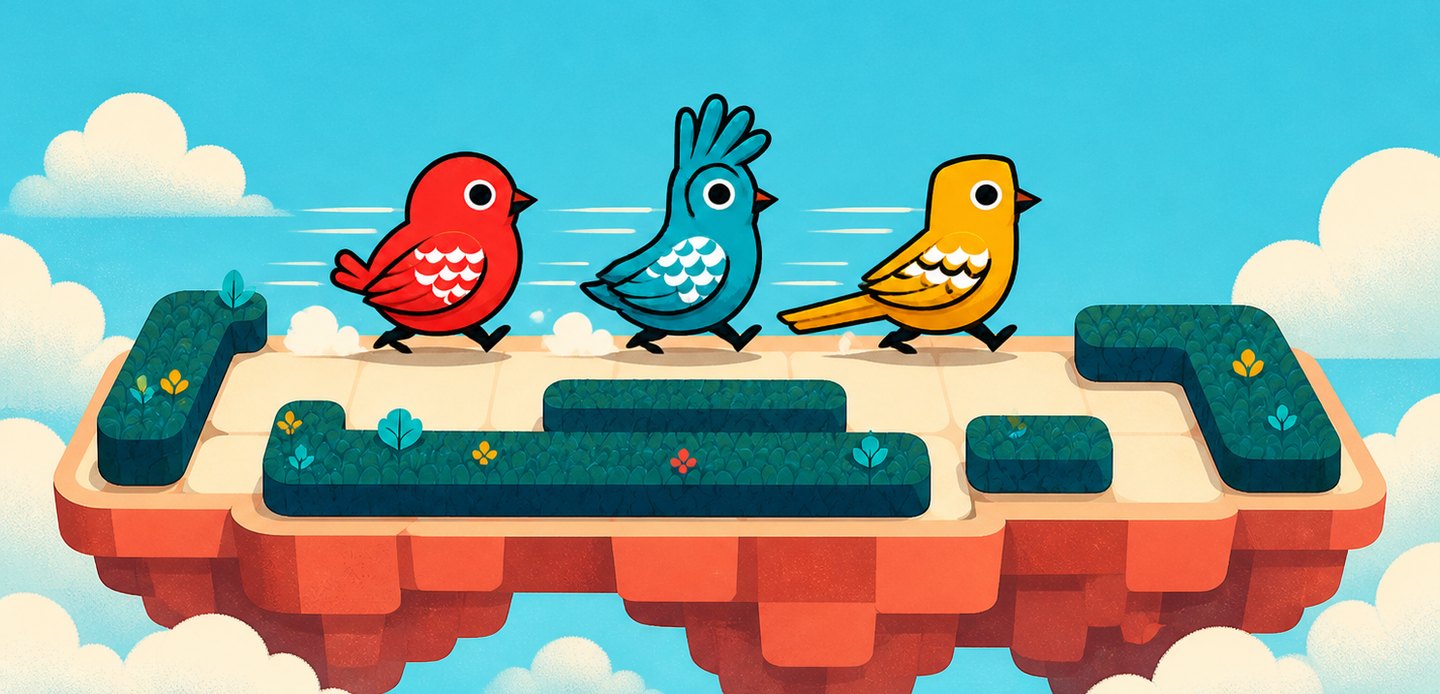
One command moves the whole flock.
A compact sliding puzzle about giving one instruction and watching several birds obey it at once.
Every free bird of that colour slides at the same time, and keeps going until a wall, another bird, or its own nest stops it. You are not moving a piece. You are moving all of them.
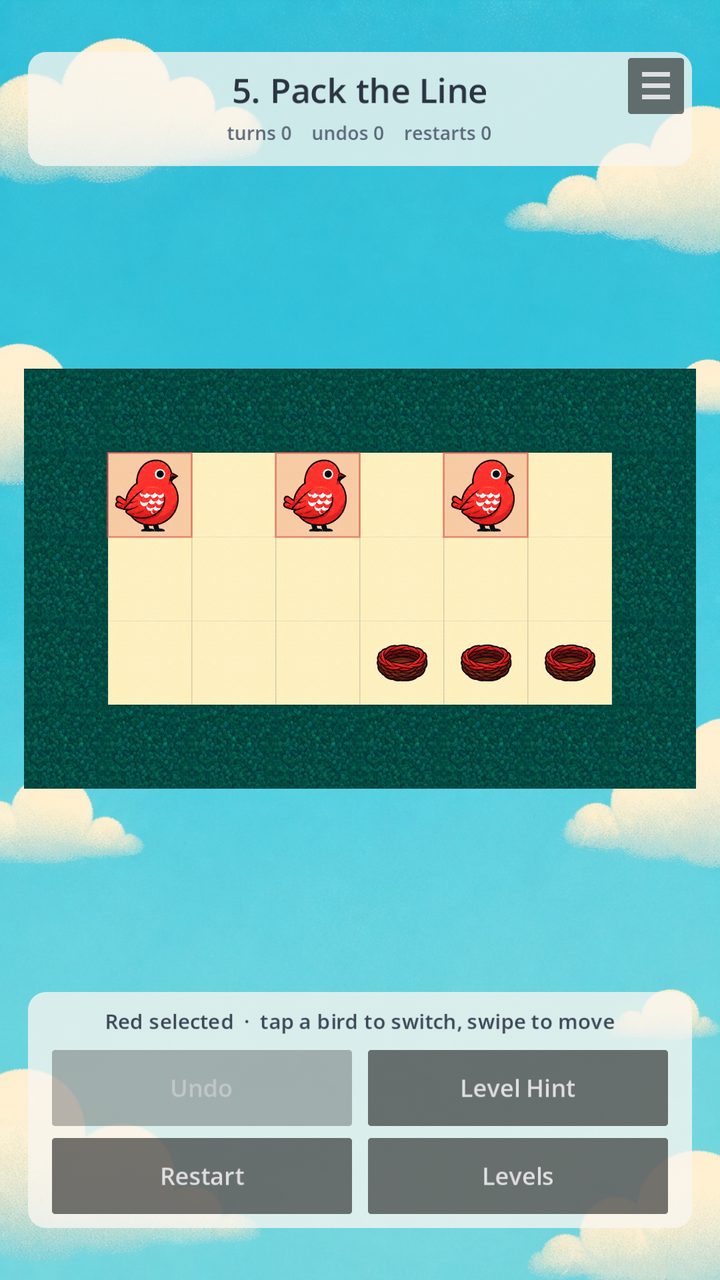
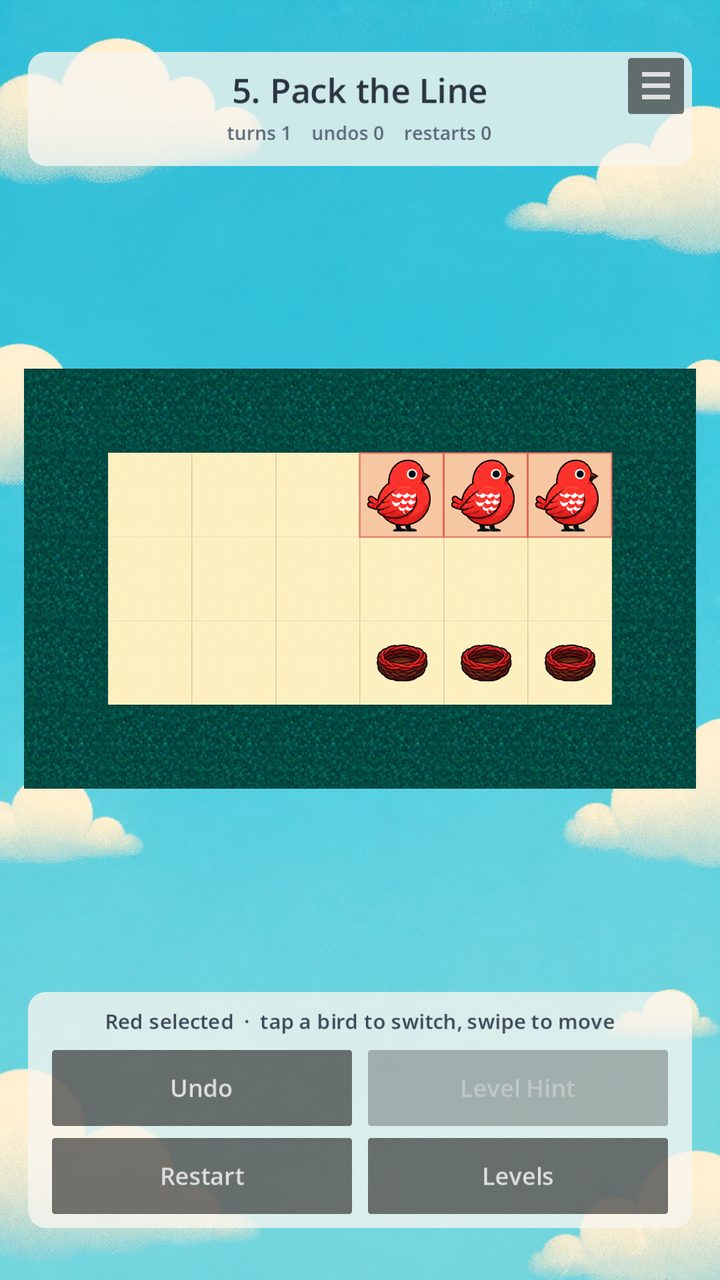
The birds behind can take the cell the bird ahead just left, so a flock arrives packed rather than scattered. Learning to use that is most of the game.
This is the solution playback the game itself offers once you have genuinely worked at a level — the real board, at the real speed. Watch a flock arrive packed, and watch a bird that gets home turn into the wall the next one has to work around.
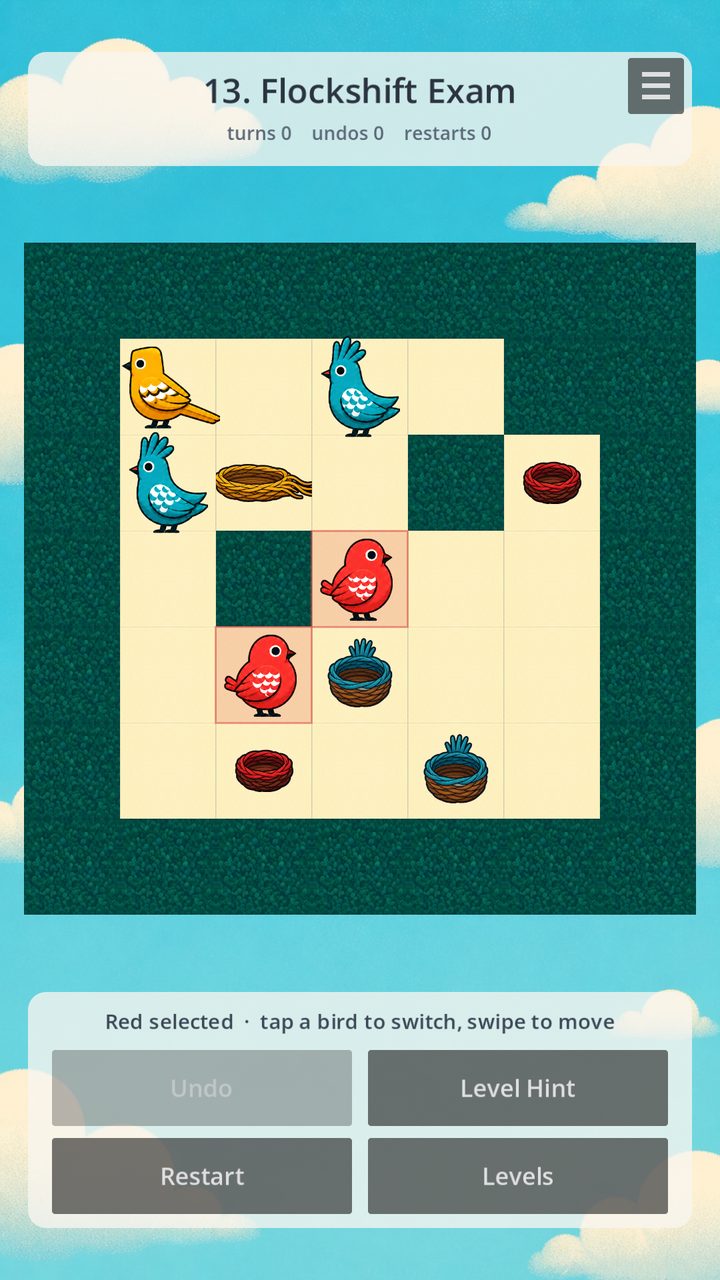
Level 13 · Flockshift Exam
solved in 9 turns, three flocks
Nothing is hidden, nothing is random, and the same move in the same position always does the same thing. Every puzzle is solvable by looking at it.
A bird moves in the chosen direction until something blocks it — a hedge, the board edge, or a bird that isn't in the moving flock.
A bird that reaches a matching nest settles there for good, even with open floor beyond it. That is how you make a bird stop where you want it.
Once home, a bird stops taking orders and starts blocking. Every bird you send home changes the board for the ones still out.
A red bird slides straight over a blue nest without noticing. It can rest on one, but it can never live there.
Not one of those rules is explained in words anywhere in the game — the opening levels teach them by letting you try. The puzzles need no translation. The interface around them is translated anyway, into English, Español, Français, Русский, 日本語 and 简体中文.
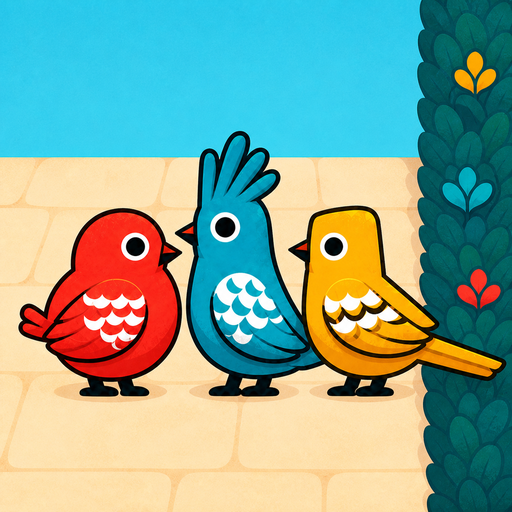
Colour is never the only signal. Each flock has its own body shape, and each nest is built to echo it — so the board still reads if you can't separate red from green.
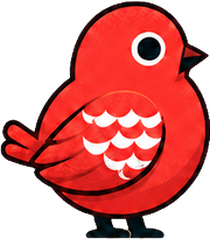
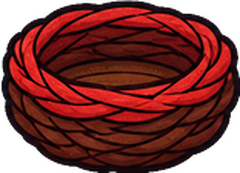 Its nest: small, round, tightly woven.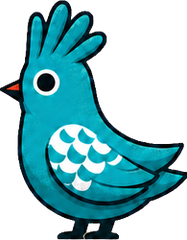
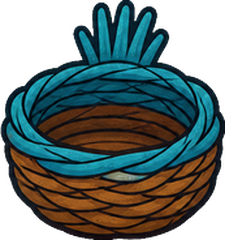 Its nest: a raised tuft of twigs at the back.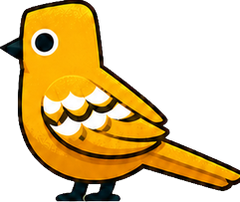
 Its nest: a wide oval trailing loose straw.
Knock all six shapes down to a flat silhouette and they are still six different objects. That is the test the art had to pass before it shipped.
Each of the opening levels introduces exactly one idea, in order, and none of them explains it in words. The rest are there to use what you learned.
The back half is ordered by how much board there is to search per correct answer, rather than by how many turns the solution takes. Ordering by turn count put the second-hardest puzzle in the game between two of the easiest.
Every level has been checked by a solver that plays the rules independently of the game. Each one is solvable, and each recorded solution is the shortest one that exists.
Add a second colour and the birds you aren't moving become the walls you move against. Add a third and the order you send them home in becomes the puzzle.
Boards stay small and always fit one screen. A level is a minute or two, not an afternoon.
No lives, no timers, no energy, no daily reset. The game never asks you to come back tomorrow, and it never asks you to wait.
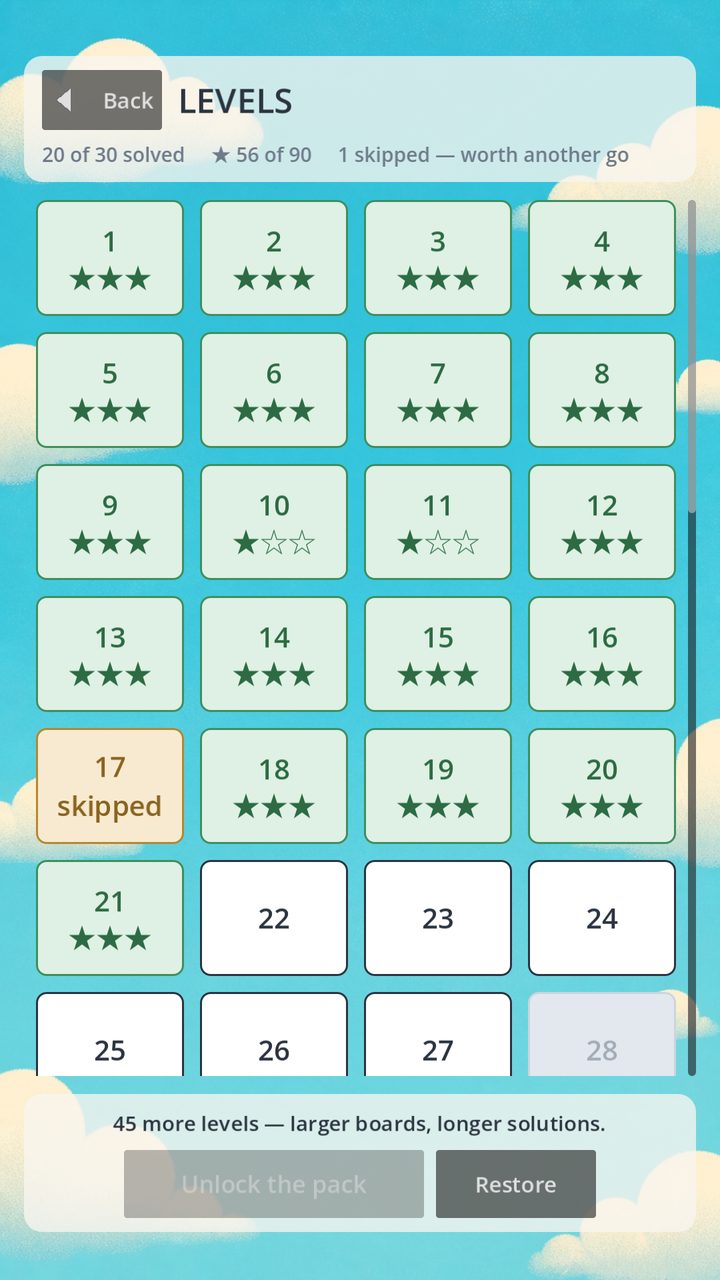
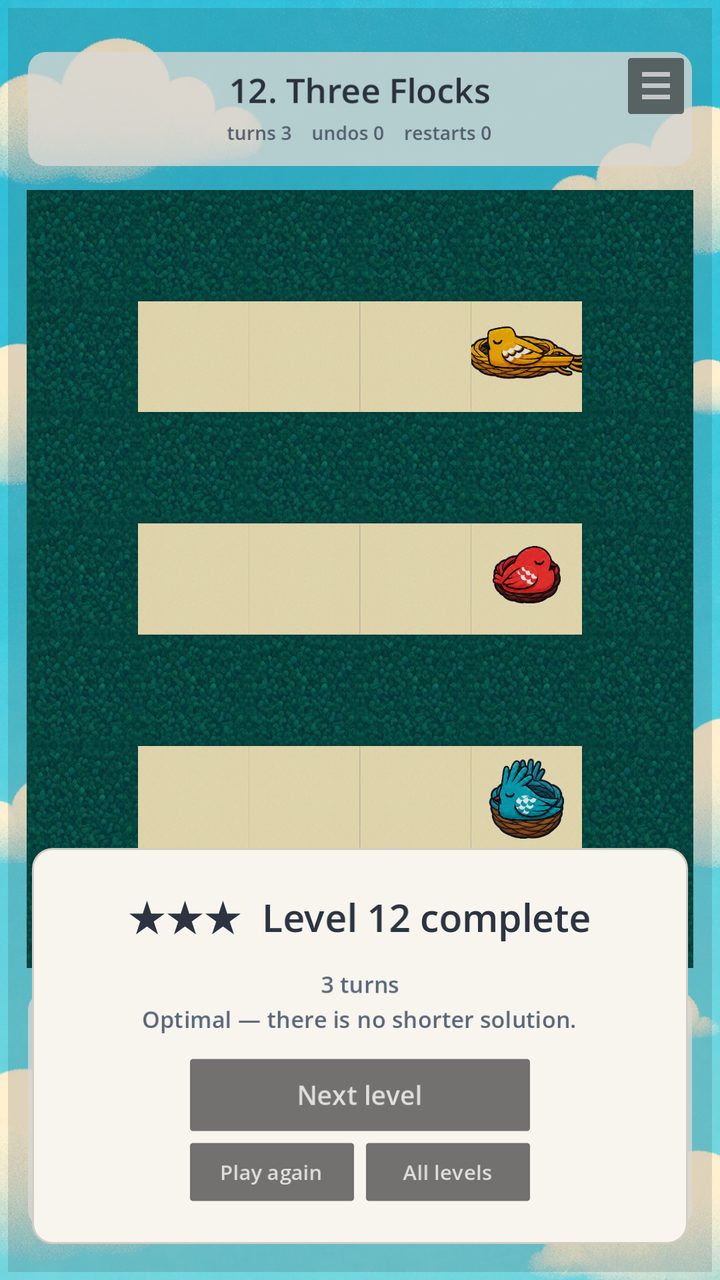
There is no score and no timer. The one mark you get is stars, and they measure only one thing: three for matching the shortest solution that exists, two for coming within a couple of turns of it, one for solving it at all.
Watching the solution or skipping a level earns none — not as a penalty, but because the star is the reason to come back to it.
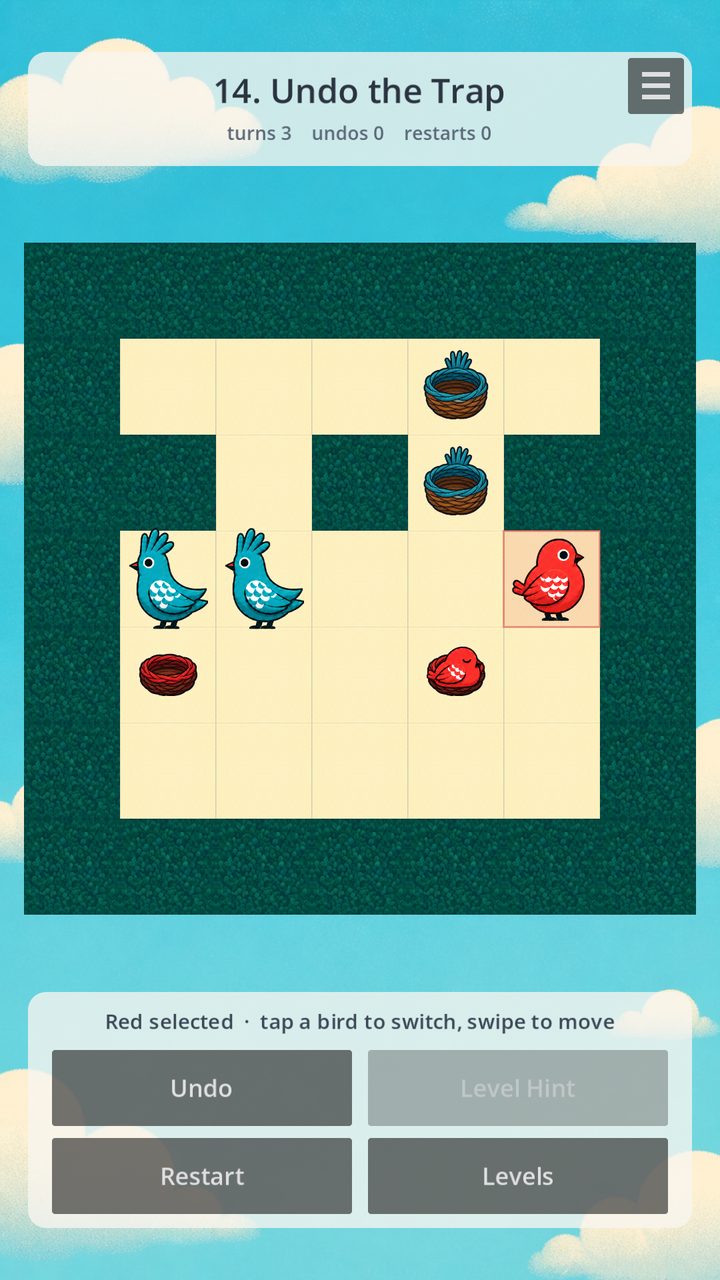
A move that strands a bird is a normal part of solving these, not a punishment. So undo is unlimited, and it's the first button on the bar.
The last two appear only after you've genuinely wrestled with a level — the same gate a puzzle book applies by making you turn to the back.
Flockshift is finished and in final polish while its sound is being made. It will be free to download with thirty levels, no advertising, and no interruptions — with an optional add-on pack that adds forty-five more.